

-
 $0 Callout. Fast Response
No hidden fees. On-site in 90 minutes in Frankston.
-
 Premium Roofing Materials Only
Top-quality Colorbond, terracotta, and more
-
 12-Year Workmanship Guarantee
Long-lasting results backed by a decade’s promise
-
 35+ Years Roofing Experience
Trusted experts delivering quality roofing since 1999

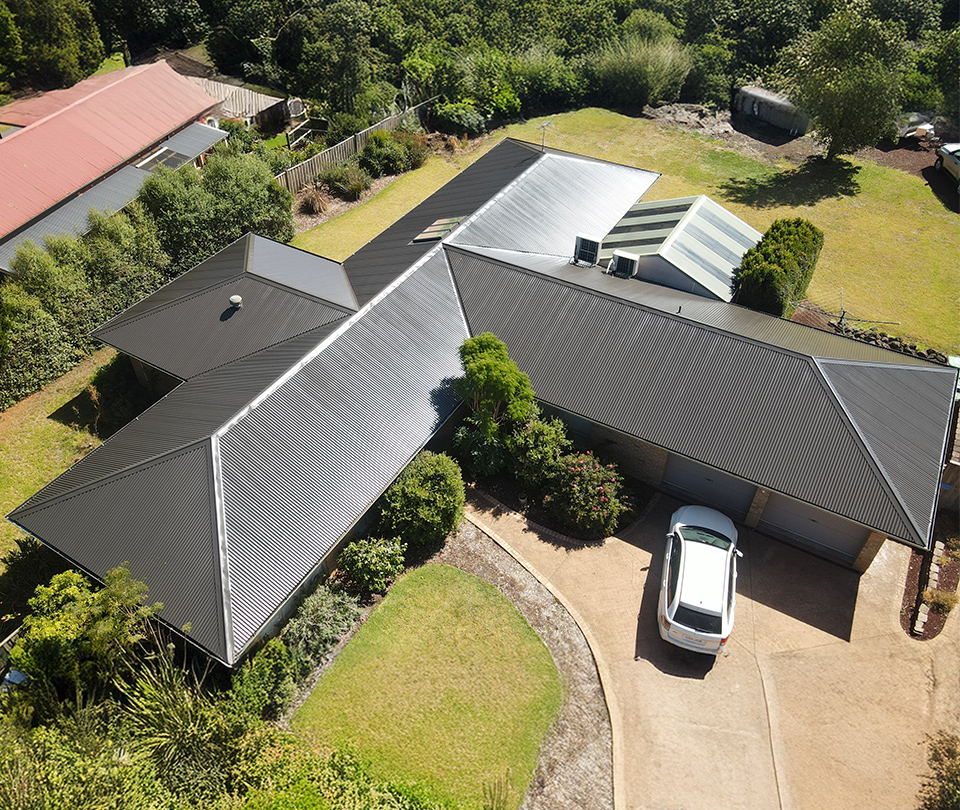
Roof Restoration Frankston, from Ridge Capping Repairs to the Final Coat of Paint
You have two quotes for the same roof and they do not describe the same job. That is where a lot of roof restoration work in Frankston begins: one price covers a wash and a coat, the next adds re-bedding, new valley irons and a tally of broken tiles. New Ridge Roofing has settled that question the same way since 1999. A qualified roof tiler gets up on the roof, at no callout fee, usually within 90 minutes of your call. Then you have a scope you can compare. Call 0439 931 138.
Roof Repairs Frankston
Plenty of jobs here are genuinely repairs: a handful of slipped or broken tiles, one rusted valley iron letting water into the ceiling, a ridge cap lifted by wind, flashing pulled away at a chimney or skylight. Sort those and the roof has years left in it.
That list is always the same list because salt air and wind do not attack a roof evenly; they concentrate wherever the roof is already interrupted. A ridge cap is bedded on mortar rather than fixed like a tile, so it is the first thing wind can work on. A valley is metal sitting under tile, permanently wet in rain and exposed to salt-laden air the rest of the time. A flashing is a deliberate break in the roof plane sealed with a folded strip. Those three are where the roof asks the most of its materials.

Roof form changes the picture too. Tin, gabled, skillion and flat sections all turn up alongside cement tile and terracotta, and each sheds water differently. A steep gable clears fast into the gutter. A skillion or a flat run moves water slowly, so anything that slows it further, a lifted lap, a blocked outlet, a slight sag, gives it time to find a way in.
Wind storms produce the urgent version of that call, and water does not always surface where it got in. It can track along ceiling ducting and appear in a room well away from the entry point, worth knowing before you start pulling a ceiling apart. Winter is when most of it shows up: driving rain arrives at an angle ordinary weather never tests, and finds openings that sat there dry all summer.
Leaf load is the other regular cause: a gutter packed solid backs water up under the tiles, and the leak that follows has nothing to do with the tiles. The water rises above the gutter’s back edge, which sits under the bottom course of tiles, and runs inwards along the eave. Fascia, guttering and barge soakers that have rotted out get replaced alongside the roof, not on a second visit. A barge soaker is the flashing tucked in along the gable edge, and it rots quietly because it stays damp under the tile and nobody ever sees it.
So if the coating is intact and the bedding is sound, a repair is what you get quoted, and the rest waits until the roof asks for it. The wider range of roof repairs we take on covers tile and metal alike.
Roof Painting Frankston
A coating is only ever as good as what sits underneath it. On a coastal roof that means getting the moss, lichen and salt residue off completely before anything goes on, because a coat laid over living lichen lifts within a season and the whole job comes around again. High-pressure cleaning, a proper dry-out, then primer and membrane coats in that order.
Salt residue is the part that gets skipped, because unlike moss you cannot see it. It builds up as a fine film, holds moisture rather than letting the surface dry, and a coating laid over it never keys to the material underneath. That is why the wash on a roof this close to the water is doing two jobs rather than one.
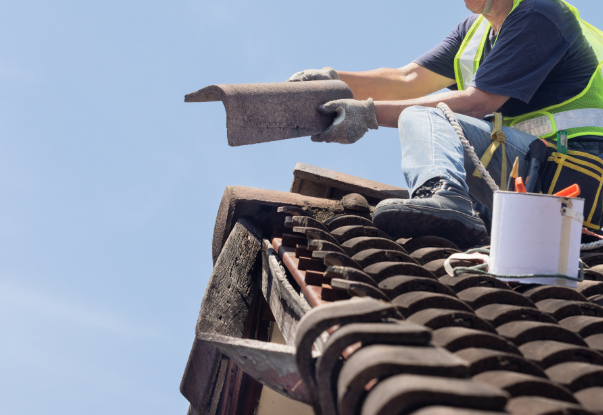
Along the coast the coating is protective rather than decorative. Strong sun, salt, wind and heavy rain all work on the surface at once, so what goes on top is the barrier holding them off the tile or the sheet. Colorbond gets the same treatment: cleaned back and recoated to keep the sheet protected, a far smaller job than replacing it and what most Frankston metal roofs actually need.
Repointing and painting usually get quoted together on a tile roof here, and are worth itemising separately so you can see what each part covers. Two things are worth asking anybody quoting: whether the roof has passed the point where coating it is the honest answer, and what happens if the finish fades patchily later. Patchy fade traces back to uneven absorption, where part of the roof was more porous or less dry when the coating went on, so the film thinned in places. It is a preparation outcome showing up later, which is why preparation is the part to interrogate in a quote.
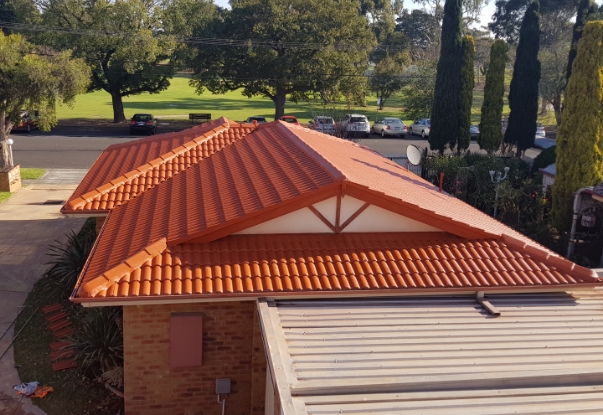
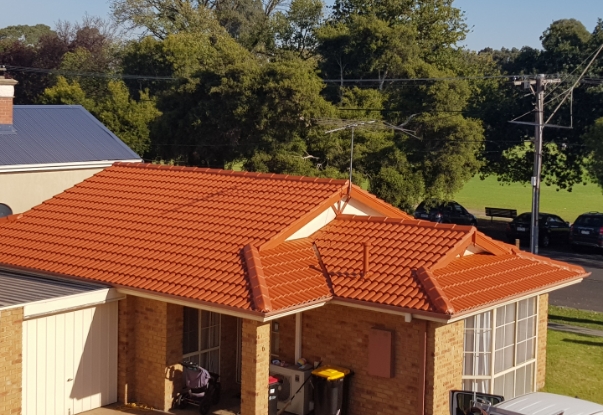
Colour is a genuine decision here rather than a detail. The restoration the team still talks about was an ageing terracotta roof taken through to Dark Charcoal: re-bedding, flexible pointing, a thorough clean, then a complete repaint. More on roof painting here.
Why Ridge Capping and Valleys Go First on a Frankston Roof
Salt air, strong winds and seasonal storms separate a roof here from one a few suburbs inland, and the wear concentrates at the ridge capping, in the valleys and across the coating. That is why a roof can look sound from the driveway while the mortar bedding under the ridge tiles has already gone soft. A Victorian winter then adds driving rain and abrupt temperature swings, and anything already open widens.
The right fix depends on what you have up there. Cement tile, terracotta, metal and Colorbond all turn up here. On tile, it is re-bedding the ridges and finishing them with flexible pointing that moves with the roof instead of cracking away, plus swapping out tiles past saving. On metal and Colorbond, it is treating rust before it spreads, then priming and recoating.
Wind and storms bring the other kind of call: a ridge cap lifts or a sheet shifts, and the first anyone knows is water inside during the next downpour. The same salt-and-wind pattern runs down the coast either side, so the job looks much the same for a roof restoration in Mount Eliza or on the older tile stock around the Mornington township. A few kilometres inland, roofs in Carrum Downs answer to heat, harsh UV and hail rather than salt.
About New Ridge Roofing
Dean Manning started New Ridge Roofing in 1999, and it is still a family business where everyone who goes up on your roof is a qualified roof tiler. Not a subcontracted crew, not a sales rep with a clipboard. The team has completed 5000+ jobs across Melbourne’s south-eastern suburbs and the Mornington Peninsula, most of them tile and metal work much like yours. There is more on the full roof restoration service.
Family business, trading since
Jobs completed across Melbourne's south-east
Google rating from 293 reviews
Year workmanship guarantee
What Happens After You Call
You deal with the tradesmen who will do the work. Ring 0439 931 138 or ask for a free quote through the site, and we aim to have someone with you inside 90 minutes, with a $0 Callout Fee whether you go ahead or not. The assessment happens on the roof, because bedding, pointing and valley condition cannot be judged from the ground.
The quote sets out what the roof needs and what it does not, and urgent repairs can go ahead now with roof painting scheduled for later. Completed work carries a 12-Year Workmanship Guarantee, and a 10 Years Satisfaction Guarantee sits behind it.

Nothing to pay whether you proceed or not

A qualified roof tiler, not a sales rep

What we quote is what you pay

Urgent work now, colour when it suits
Restore or Replace: How We Tell the Difference
A roof that looks finished from the driveway usually is not. If the frame and battens are sound, the tiles are intact or can be matched and swapped individually, and what has failed is the coating and the mortar holding the ridges, that is a restoration. Salt and wind go after the surface and the bedding long before anything structural, which is why so many roofs along this coast read worse than they are.
Replacement is a different conversation. Cracking through the body of a tile rather than across its surface, battens gone soft, sheet rusted right through, or a profile discontinued so long ago no matching stock exists: those are the jobs where a coat of anything is money twice spent. You get told which one you have before committing.
What Affects the Cost of Restoring a Roof in Frankston
Every roof is quoted on its own merits rather than off a rate card, because what moves the number is never the same on two houses:
- Roof size and pitch, and whether the house is single or double storey
- The substrate, and how far the coating or sheet has gone
- How much bedding and pointing has to be stripped back and redone
- How many tiles need replacing, and whether the profile can still be matched
- Access, and how much of the roof needs staging
- Whether roof painting is in this stage or scheduled for later
The quote is free and carries no obligation, and the $0 Callout Fee applies either way. What we quote is what you pay, with no hidden fees.
Common Questions About Roof Restoration in Frankston
There is no honest flat answer, and any figure offered before someone has been up on your roof is guesswork. The inspection and the quote cost nothing, so you find out what your roof needs first.
Where the structure is sound and the surface has gone, yes. Restoring puts years back on the roof with far less disruption than a re-roof, and protects the ceilings, insulation and framing underneath. Where a roof is structurally finished you get told so rather than sold a coating.
That is a replacement, and a much bigger job: the old roof comes off, battens and sarking are checked or renewed, new material goes on. Right for tiles cracking through the body, sheet rusted through, or battens past their life. Wrong for a roof whose real problem is a failed coating and crumbling ridge mortar, which describes a good many roofs in Frankston.
It is a clean and a coat. A restoration takes in the repair work too: re-bedding and repointing the ridges, replacing broken tiles, sorting valleys and flashings, and only then cleaning, priming and coating. That preparation is most of the labour, and decides whether the coating holds.
Book a Free Roof Inspection in Frankston
Knowing which of the three you need comes before comparing anyone’s quotes. New Ridge Roofing can have a qualified roof tiler on site within 90 minutes: 0439 931 138, or the free quote form on this page.