

-
 $0 Callout. Fast Response
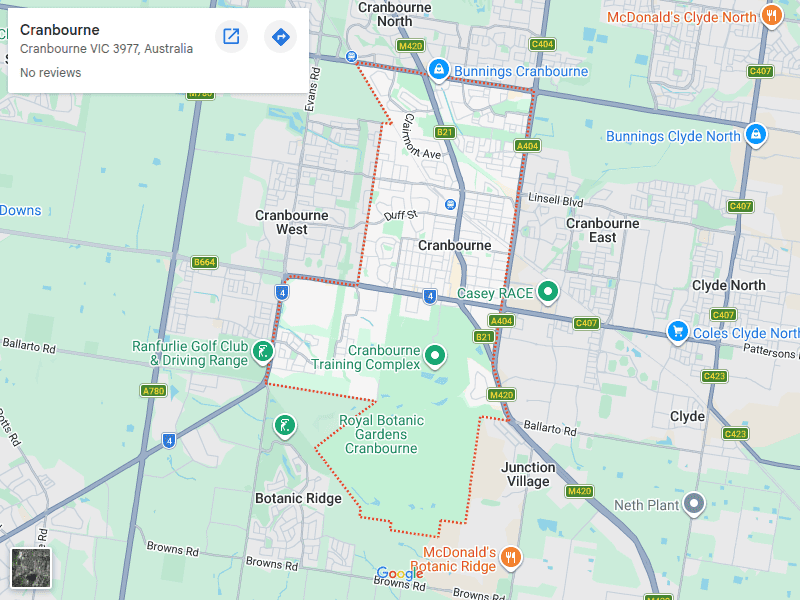
No hidden fees. On-site in 90 minutes in Cranbourne.
-
 Premium Roofing Materials Only
Top-quality Colorbond, terracotta, and more
-
 12-Year Workmanship Guarantee
Long-lasting results backed by a decade’s promise
-
 35+ Years Roofing Experience
Trusted experts delivering quality roofing since 1999

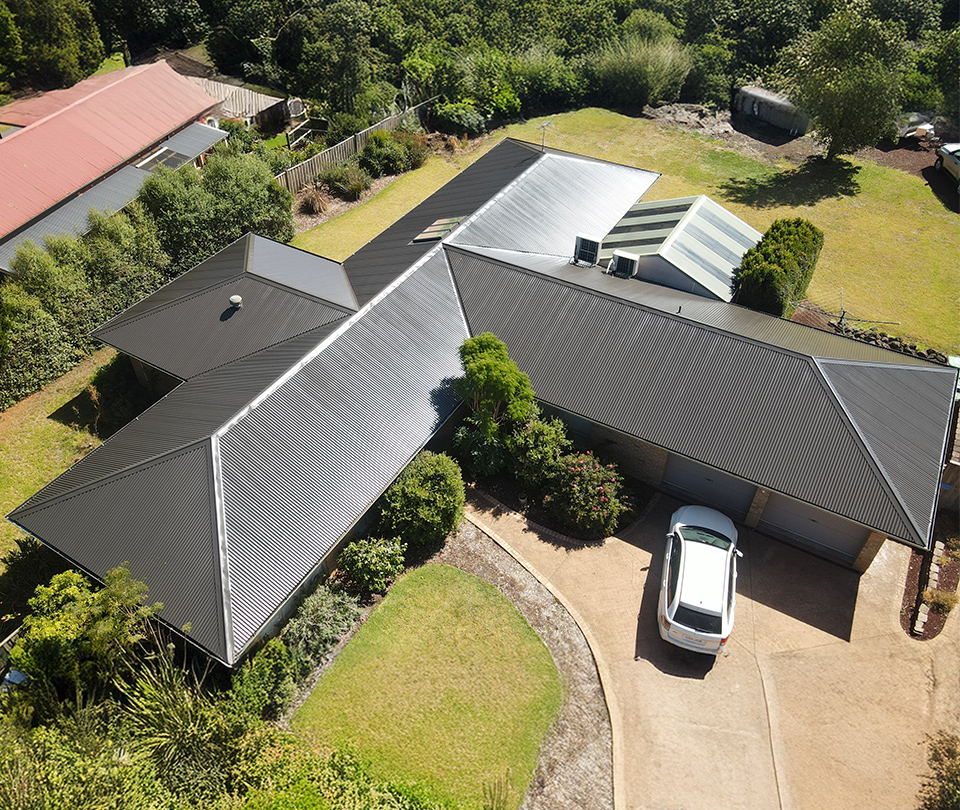
Roof Restoration Cranbourne, Repairs, Painting and the Failure You Cannot See
Cracked tiles announce themselves. The slower failure on a Cranbourne roof does not: once the factory coating wears off, the tile stops shedding water and starts drinking it, and the first sign is a room that will not hold its warmth. Past about 15 years that is the quiet defect behind much of the roof restoration work booked out here, and from the street the tiles look no different to last summer. New Ridge Roofing has been reading roofs like that since 1999. Ring 0439 931 138.
Roof Repairs Cranbourne
Storms do most of the damage here, and the aftermath reads the same each time: cracked or missing tiles on one part of the roof, rusted or warped panels on another. Plenty of houses here carry both.
Roof forms run from tin and gabled through to skillion, flat and curved, and where two materials meet the flashing and drainage at that junction is where leaks start, so it gets detailed rather than sealed over. Tile and sheet move at different rates and water off a metal plane arrives faster and in a narrower run, so a bead of sealant across the join is temporary at best. Curved and skillion runs shed slowly at a shallow pitch, putting more load on the laps, the flashings and the fall of the drainage.

Storm damage is worth reading rather than counting. A cracked tile looks intact from below, because the crack stays closed until the tile flexes or the wind lifts it. A warped metal panel is a fixing problem before it is a sheet problem. Missing tiles are the urgent case, because an open bay puts water straight onto the sarking and the battens.
Gutters, downpipes and the fascia timber behind them are the other standing job, usually failing at a corner. Corners are where the fall changes and debris collects, so a gutter there holds water and spills over the back lip onto the fascia. The timber goes soft from behind, out of sight, which is why fascia repairs turn up alongside a gutter job. A downpipe never tied properly into the run does the same on a smaller scale.
Small cracks and localised rust are worth dealing with at that size, before water is into the roof space, and what a repair involves is set out on its own page. The judgement is extent rather than severity: a few cracked tiles, one bad junction and a corner of guttering is repair work; the same faults across every plane means the roof has moved past it.
Roof Painting Cranbourne
The signs a coating has finished are easy to read: colour fading out or going patchy, the film peeling or bubbling, black streaking down the slopes, a stain on a ceiling inside.
Each points at something different. Fading is the binder losing its hold on the pigment under ultraviolet, the earliest to show. Patchiness means the film has gone in some places and not others, where the sun lands hardest. Peeling and bubbling are bond failures rather than wear, and bubbling means moisture is coming out of the substrate and pushing the coat off from behind. Black streaking is dirt and growth washed into the low points, so the surface is rough enough to hold both. A ceiling stain has stopped being a coating problem at all.
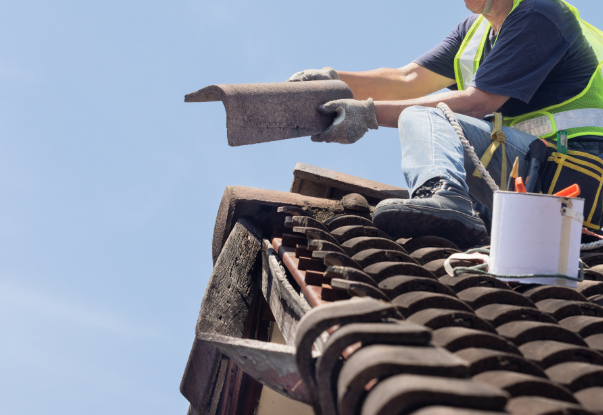
Paint cannot stand in for the work underneath it. Broken tiles, cracked ridge capping and moss all have to be dealt with before any colour goes on. Ridge capping is most often left in and the worst to leave: the mortar under the caps sits at the highest line on the roof, so anything it lets through feeds every plane below. Moss holds damp against the tile, and a film laid over it seals the moisture in.
On metal and zinc the equivalent is rust: every patch treated back to sound steel first, because rust keeps converting under anything laid over the top. Surface patches on an otherwise sound sheet are recoverable. A sheet that has gone through is not a painting job at all.
Whether the new coating cracks and fades the way the old one did comes down to that preparation and to a system built for scorching summers and wet, windy winters, harder on a film than either extreme alone, so it has to stay flexible as well as hold its colour. How a roof is coated covers both.
What Happens Once a Tile Stops Being Waterproof
A roof tile is not waterproof in itself. The coating on its surface does that job, and it is a wear item. When it goes, the tile body turns absorbent and the roof holds water instead of moving it off. Roofers around Cranbourne describe the same sequence: the coating wears away, the tiles drink, and the house sits damp and cold inside with nothing visible from below.
The earlier stage shows from the ground: colour faded unevenly, patches that no longer match, a surface gone chalky. Those signs show up around the fifteen-year mark, and left alone the moisture works into the battens and the ceiling.
Local trades will tell you roofs in Cranbourne wear out faster than owners expect: scorching sun through summer, winter rain, and a wind that never lets up.
Terracotta, Cement Tile and the Metal Roofs In Between
Restoration work in Cranbourne spans terracotta tile, cement tile, Colorbond and flat metal, and which one is over your head changes everything that follows.
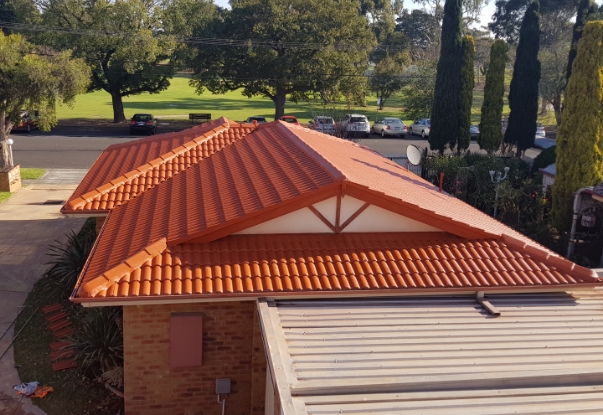
Terracotta is fired clay with a glaze on the face. Once the glaze has weathered off the tile is bare, so it is cleaned carefully rather than blasted: the pressure that suits a cement tile will take the rest of the face off a clay one. A colour change is on the table, and a weathered clay roof recoated in dark charcoal is one of the bigger transformations in this trade.
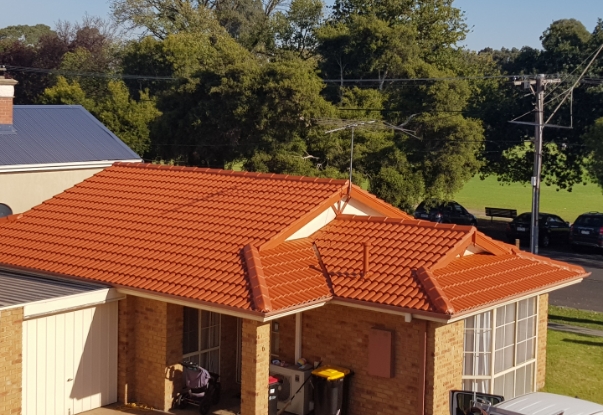
Cement tile was coated at the factory, that coating has failed, and a proper recoat puts it back. Metal corrodes instead of absorbing: rust is cut back and treated at the fixings, the laps and any rusted valley iron, then the sheet is washed, primed and recoated. How the coatings are chosen is on the roof painting page.
How New Ridge Roofing Runs a Cranbourne Job
A roof that has stopped shedding water looks no different from the street, so the answer comes from somebody standing on it. Dean Manning has run New Ridge Roofing as a family business since 1999, with 5000+ jobs completed across Melbourne’s south-eastern suburbs, and the tiler who assesses your roof is one of those who works on it.
Being kept informed step by step is what Cranbourne homeowners say they want most, and it is how a job runs. Full credentials and the complete restoration sequence are on the roof restoration service page. The same work carries on either side of here, on the concrete tile stock around Hampton Park, the roofs a few minutes north at Narre Warren and the older tiled homes over at Carrum Downs.
Family business, trading since
Jobs completed across Melbourne's south-east
Google rating from 293 reviews
Year workmanship guarantee
Ninety Minutes, and Nothing to Pay for the Look
Ring 0439 931 138 or send a free quote request through the site, and the aim is a qualified roof tiler at your place within 90 minutes. There is a $0 Callout Fee whether you go ahead or not.
The assessment happens on the roof: porous tile, failed bedding and the real state of a coating do not read from ground level. What comes back is a written, no-obligation quote covering what the roof needs and what it does not. What we quote is what you pay: no hidden fees, nothing added once the job is underway. It can be staged, with urgent repairs done now and roof painting booked for later. Completed work carries a 12-Year Workmanship Guarantee, with a 10 Years Satisfaction Guarantee behind it.

Nothing to pay whether you proceed or not

A qualified roof tiler, not a sales rep

What we quote is what you pay

Urgent work now, colour when it suits
Restoring It, and the Point Where That Stops Working
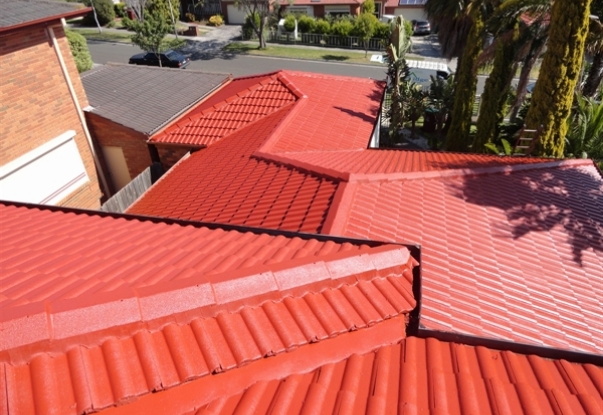
Most roofs that look finished are not. Where the frame and battens are sound and the failure is in the coating rather than the tile, a restoration puts years back on the roof for a fraction of a re-roof.
Terracotta draws the line differently. A clay tile that has begun to spall, flaking away in layers, is past coating, and if the profile has been out of production for decades there may be no matching stock for the ones that break. Broken tiles, a lifted ridge cap or a rusted valley on an otherwise sound roof are repairs worth doing early.
What Moves the Number on a Cranbourne Quote
No square-metre rate survives contact with a real roof. What the price is built from:
- How far the tiles have gone porous, and how many break underfoot during the work
- Whether it is terracotta, cement tile or metal, since each takes a different system and preparation
- How much ridge bedding has to be laid again, and how much flexible pointing goes over it
- Whether painting is part of this stage or scheduled for a later one
The inspection and the written quote are free and carry no obligation. If your roof does not need doing yet, that is what you will be told.
What People Ask Before They Book
No honest figure exists before someone has been up there: the four things above move it further than roof size does. What you can pin down is the process, a free on-site inspection, a written quote itemising the work, and a price that does not move once the job starts. Ask whether a quote covers re-bedding, repointing and broken tile replacement, or only a clean and a coat. That explains most of the gap between two prices.
On tile it is usually worth it. The tile body outlives its coating by decades, and renewing the coating and mortar work while the structure is sound is far cheaper than the repair bill once water is into the ceilings.
Have the leak found and repaired on its own. A single cracked tile, a blown ridge cap or a rusted valley iron does not justify a full restoration. A wet mark on a ceiling is where the water came out, not where it came in, so tracing comes first.
Metal restores well. Rust is treated back to sound steel, the sheet cleaned down and recoated, and a rusted valley or flashing replaced rather than painted over. Colorbond and flat metal are common enough here for that to be routine work.
Get It Looked At While It Is Still Only the Coating
A tile taking on water will not announce it, and by the time a room underneath feels damp the cheap window has closed.
Call 0439 931 138 or ask for a free quote online, and someone qualified will tell you which stage your roof is actually at.