

-
 $0 Callout. Fast Response
No hidden fees. On-site in 90 minutes in Mornington.
-
 Premium Roofing Materials Only
Top-quality Colorbond, terracotta, and more
-
 12-Year Workmanship Guarantee
Long-lasting results backed by a decade’s promise
-
 35+ Years Roofing Experience
Trusted experts delivering quality roofing since 1999

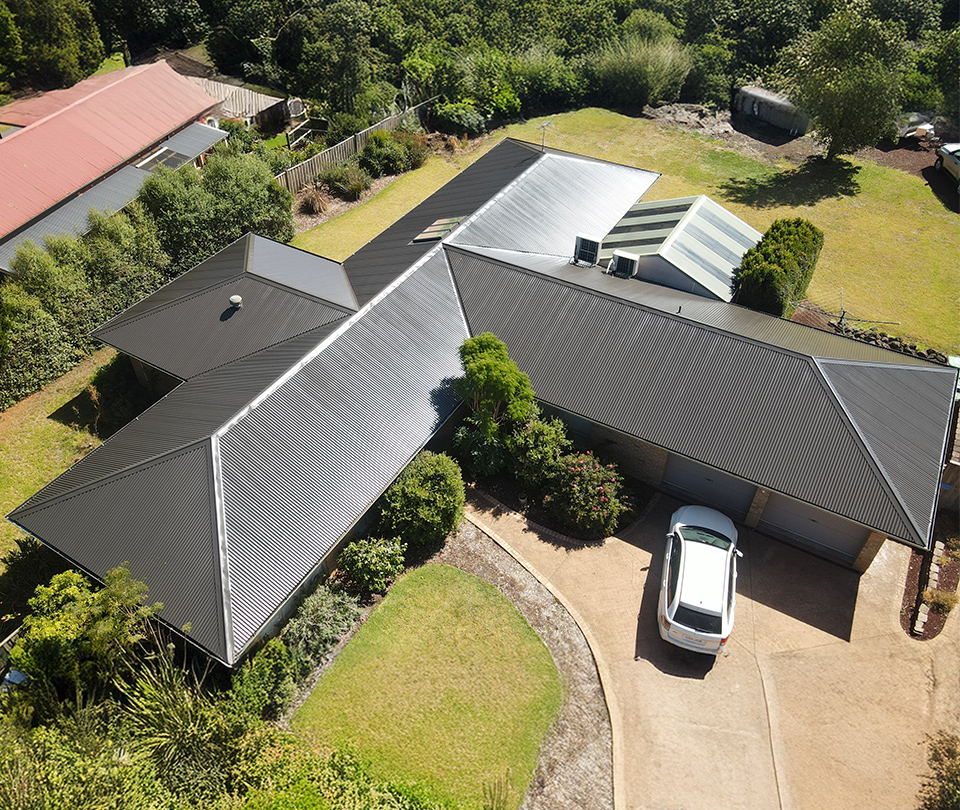
Roof Restoration Mornington Covers Repairs and Painting, Beleura Hill to Newer Streets
Your roof has never been restored and, at thirty-odd years old, you are wondering whether it is due. In the 1970s to 90s housing behind Mornington’s older streets that is the right question, because those roofs are reaching their first restoration about now. New Ridge Roofing has been at this since 1999, and it is not an answer anybody gives from the driveway. A qualified roof tiler comes out at no callout fee and puts a written scope in your hand, usually within 90 minutes. Call 0439 931 138.
Roof Repairs Mornington
Not every roof problem here is a restoration, and plenty are small enough that owners struggle to get anyone out. A leak the size of a saucer still has to be found and fixed, and a job too small to interest someone else is not a reason to be quoted a bigger one.
The most common fault is not on the roof at all. A blocked downpipe or an overflowing gutter is the most preventable cause of water getting inside a house on this side of the bay. A full gutter sends water over the back edge rather than the front, straight onto the fascia and down into the eave and the wall. That timber stays wet after every fall of rain, and rot follows, unseen until the eave lining or the plaster shows it, by which point the repair is carpentry as well as roofing.
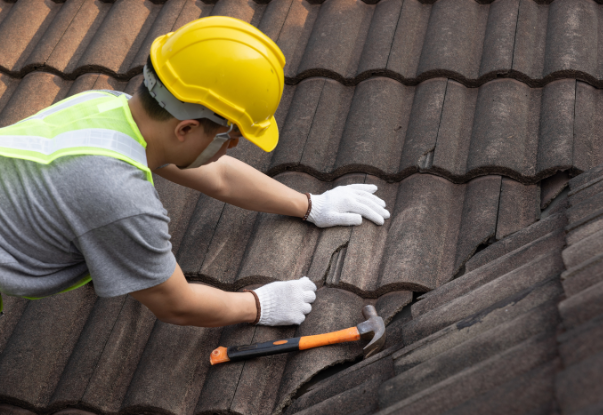
The run into winter tests all of it. Driving rain, strong winds and abrupt temperature swings arrive together, and a gutter that coped through a mild autumn will not cope with a real downpour. Clearing gutters and downpipes before that is the cheapest maintenance there is.
After a rough stretch the rest of the list is predictable. A cracked or slipped tile. A ridge cap lifted where the bedding had already gone. A rusted valley iron. A flashing perished at a wall or a penetration. Each is a contained fault with a contained fix, worth finding while it is still contained.
Moss and lichen belong on the list too, even though they do not leak. Growth holds moisture against whatever it sits on, and a surface that never dries between falls of rain ages faster. Taking it off is what stops the roof wearing out underneath it.
Any of those on a sound roof is targeted roof repair work, and you should not be quoted a replacement for it.
Roof Painting Mornington
Two things decide how long a coating lasts on a Mornington roof, and neither is the colour. Salt carries in off the bay, and the sun does the rest.
Salt is the one people underestimate, because it does not look like anything. It settles as a fine deposit and draws moisture out of the air, so a salted roof stays damp longer after every dew and shower. On metal that means corrosion at the fixings, cut edges and laps. On tile it means a surface that never fully dries and a coating worked at from underneath.
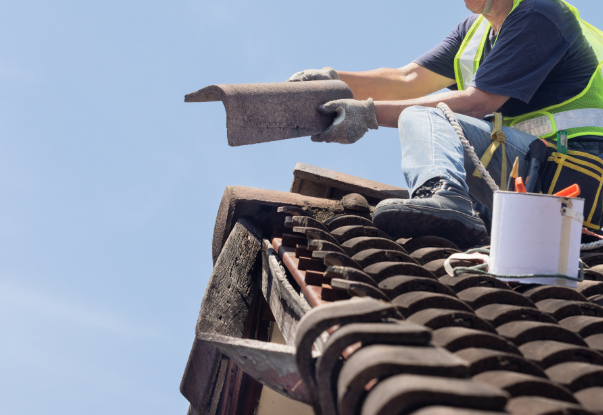
That has a direct consequence for painting. Salt residue has to be washed off completely first: a coating laid over it bonds to the salt rather than the roof, and when that layer lets go the coating goes with it, in patches, whatever the product cost. Rinsing properly, rather than pressure cleaning and moving straight on, separates a coastal job that holds from one that does not.
Ultraviolet is the second force, working on the colour rather than the bond. A roof facing the water takes more sun and reflected light than one a few streets back, so the pigment goes sooner. A coating specified for that exposure matters more here than the shade.
After that the material decides the method. Terracotta is handled rather than blasted, because the glaze on the face is doing real work. Cement tile is sealed first, because bare cement is porous. Metal is treated back to sound steel and primed, because steel corrodes rather than absorbs.
Weather sets the timetable. Coats need dry conditions and dry time between them, and storm exposure part way through a system cannot be worked around, so exterior work is booked around the forecast rather than the calendar. That is not a delay. It is the job. The full sequence is on the roof painting page.
Beleura Hill and the Main Street End
If your place is one of the grand period homes up on Beleura Hill, or a character property around the Main Street end, the roof is a different proposition to the rest of the suburb. Terracotta and early concrete tile dominate up there, and the tile itself has usually held up best. What has gone is everything holding it together: the bedding under the ridge caps, the pointing over it, the odd tile cracked by a century of foot traffic.
Access is the second half of the job and a real cost driver. Tight streetscapes around the historic core leave little room for a truck or scaffold, and on a steeply pitched period roof you cannot simply walk the tiles. That is worked out on site, before a figure goes on paper.
The Bay-Facing Streets
Direct bay exposure changes what a coating has to survive. Salt settles on everything and works at the fixings, laps, flashings and the coating itself, so the roof chalks and fades faster than an identical one a few streets back.
The consequence is all in the preparation: salt residue off first, high-pressure cleaning, a full dry-out, then primer and coating. On metal, rust is treated back before recoating rather than painted over. The same exposure runs along the coast either side, so the approach is much the same on a roof at Mount Eliza or on the elevated homes at Mount Martha further down.
New Ridge Roofing: Same Tradesmen, Start to Finish
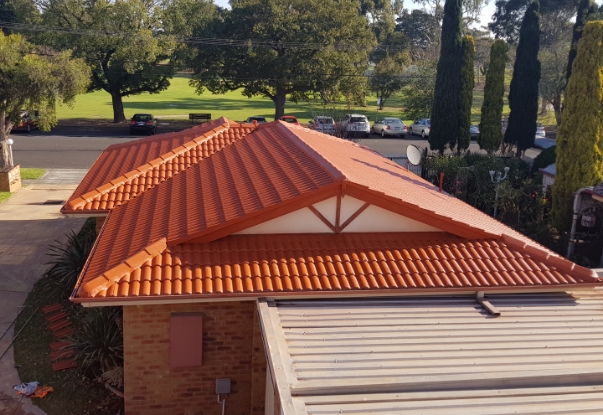
Old terracotta and thirty-year-old concrete tile are not the same trade, and this suburb has both. Dean Manning has run New Ridge Roofing as a family business since 1999, and the person who assesses your roof is one of the people who works on it. Nothing is subcontracted to a crew you never met. The team has 5000+ jobs behind it across Melbourne’s south-eastern suburbs and down the Peninsula. The whole sequence of a job is on the roof restoration service page.
Family business, trading since
Jobs completed across Melbourne's south-east
Google rating from 293 reviews
Year workmanship guarantee
From Your Call to a Written Scope
Ring 0439 931 138, or request a free quote through the site, and the aim is a qualified roof tiler with you inside 90 minutes, with a $0 Callout Fee whether you go ahead or not. The assessment happens on the roof, because bedding, pointing and the state of a coating do not read from the ground.
What comes back is a written scope: what the roof needs, what it does not, what each part costs. What we quote is what you pay, with no hidden fees and nothing added once work starts. You can stage it, taking urgent repairs now and scheduling roof painting for later. Finished work carries a 12-Year Workmanship Guarantee, with a 10 Years Satisfaction Guarantee behind it.
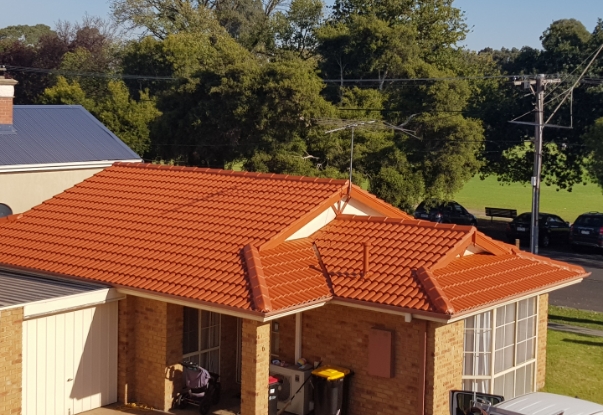

Nothing to pay whether you proceed or not

A qualified roof tiler, not a sales rep

What we quote is what you pay

Urgent work now, colour when it suits
Thirty to Forty Years, and a First Restoration
Behind the older streets sits a lot of 1970s to 90s family housing, and those roofs are arriving at their first restoration rather than their second. A roof never touched is usually in better structural shape than it looks. The concrete tile has worn out its factory coating: the surface turns porous, holds water instead of shedding it, moss finds a foothold, and the whole thing goes flat and dusty.
On tile the sequence is clean, repair, re-bed the ridge caps, flexible pointing that moves with the roof, then primer and coating. On Colorbond the same principle applies differently: treat any rust, clean the sheet, prime and recoat. Broken tiles, a lifted ridge cap or a rusted valley iron alone are repairs rather than a full job.
Getting the Colour Right
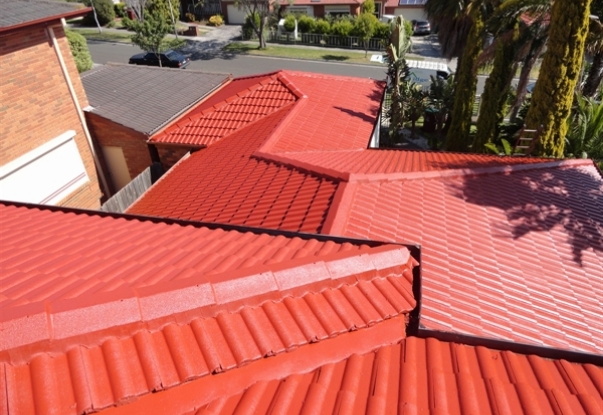
On a period home the colour is most of the decision. A roof that reads wrong against the brickwork is one you look at every day, and repainting later is not cheap. Heritage-appropriate reds and deep terracotta tones suit the older stock, and a UV-stabilised coating behind them keeps the colour from going chalky. Newer homes go the other way, toward contemporary greys and charcoals. Either way there is a Roof Colour Visualiser on our website, so you can see the options on a roof before committing.
When a Roof Is Genuinely Finished
Most are not.
If the frame and battens are sound, the tiles whole or matchable, and the failure is in the coating and mortar rather than the structure, a restoration puts years back on the roof.
Replacement earns its place in a narrower set: cracks through the body of a tile rather than across the face, battens gone soft under years of moisture, sheet corroded through, or a profile so long out of production that no matching stock exists. Coating over any of those spends the money twice, and on an older period roof you should be shown the evidence rather than told the verdict.
What the Quote Is Actually Priced On
No square-metre rate survives contact with a real roof, especially this side of the bay. What moves the number:
- Roof size and pitch, and whether the house is single or double storey
- The substrate, and how far the coating has broken down
- How much bedding and pointing has to be redone
- How many tiles are cracked or slipped, and whether the profile can be matched
- How much salt residue and growth comes off before coating
- Access, a genuine factor on the tighter streets rather than a footnote
- Whether roof painting is in this stage or later
The inspection and the written quote are free and carry no obligation, and the $0 Callout Fee applies either way.
Four Straight Answers
Because they describe different jobs. One covers a clean and a coat; another includes re-bedding the ridges, repointing, replacing broken tiles and sorting the valleys first. Read what each scope includes rather than the total, and ask what happens if more shows up once the roof is cleaned.
The method is different, the principle is not. Steel corrodes rather than cracks, and salt accelerates that at the fixings and laps. Rust is treated back to sound metal, the sheet cleaned of salt and chalking, then primed and recoated. Paint straight over corrosion bubbles within a season.
Yes, and worth spending time on. Heritage reds and terracotta tones hold up well on the older roofs, and a UV-stabilised coating stops them fading. The colour visualiser lets you see the choice on a roof rather than off a chip.
Probably close, but worth confirming. A roof of that age often needs the coating renewed and the ridge bedding redone while everything else is sound, which costs far less than waiting until water reaches the ceiling.
Start With What Is Actually Up There
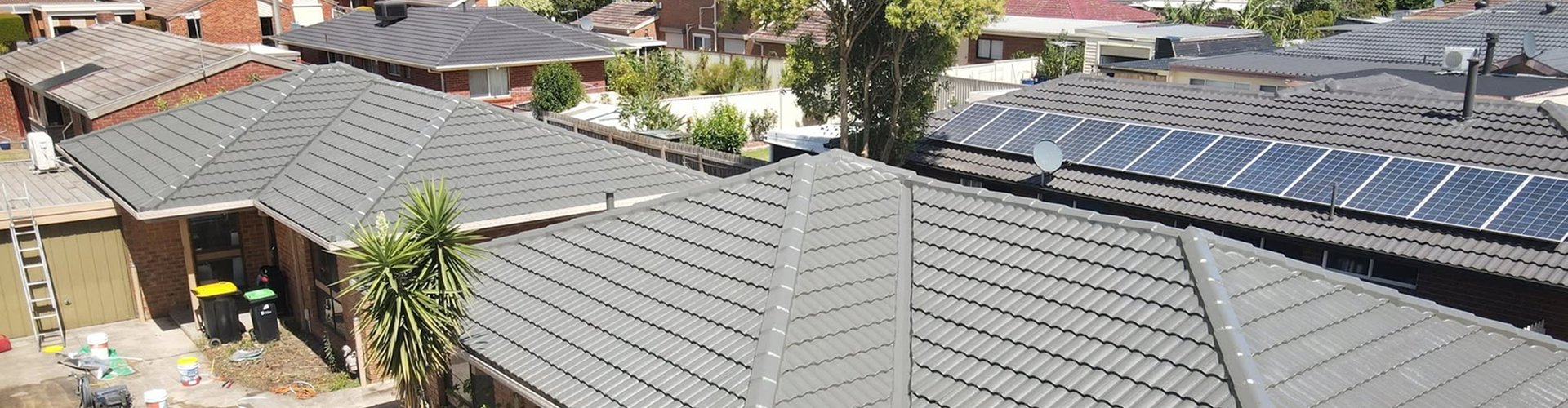
A period roof on the hill and a thirty-year-old family home a few streets away want opposite things, and neither is obvious from the footpath.
Before anything gets quoted, somebody should be up there working out which of the two yours is. That visit is free, and 0439 931 138 books it. So does the quote request on the site.