
What Drives the Price of Roof Pointing and Re-Bedding the Variables That Change a Quote
- August 10th, 2026
- Categories: Uncategorized
“How much will it cost to fix my roof pointing?” This is often one of the first questions we’re asked, and it’s a fair one. Money is foremost on people’s minds these days. However, we can’t give an accurate quote over the phone because each roof, each job, is different. Pointing and re-bedding jobs can differ depending on what’s going on up in your roof.
Two houses on the same street can receive wildly different quotes to fix the roof, and it’s not because tradies are trying to charge more than the next guy, it’s because each roof is different. One might be steeper than the other, while another might have a large area to be repaired. One repair may be simple, and the other could use premium materials. The final number to be quoted can vary for many reasons.
In this article, we’ll walk through the main factors that shape a pointing and re-bedding quote, so you know exactly what you’re paying for and why two quotes for “the same job” can look so different. If you’d rather skip straight to a real number for your roof, get in touch and we’ll organise a free, no-obligation quote.
Roof Size and Ridge Length
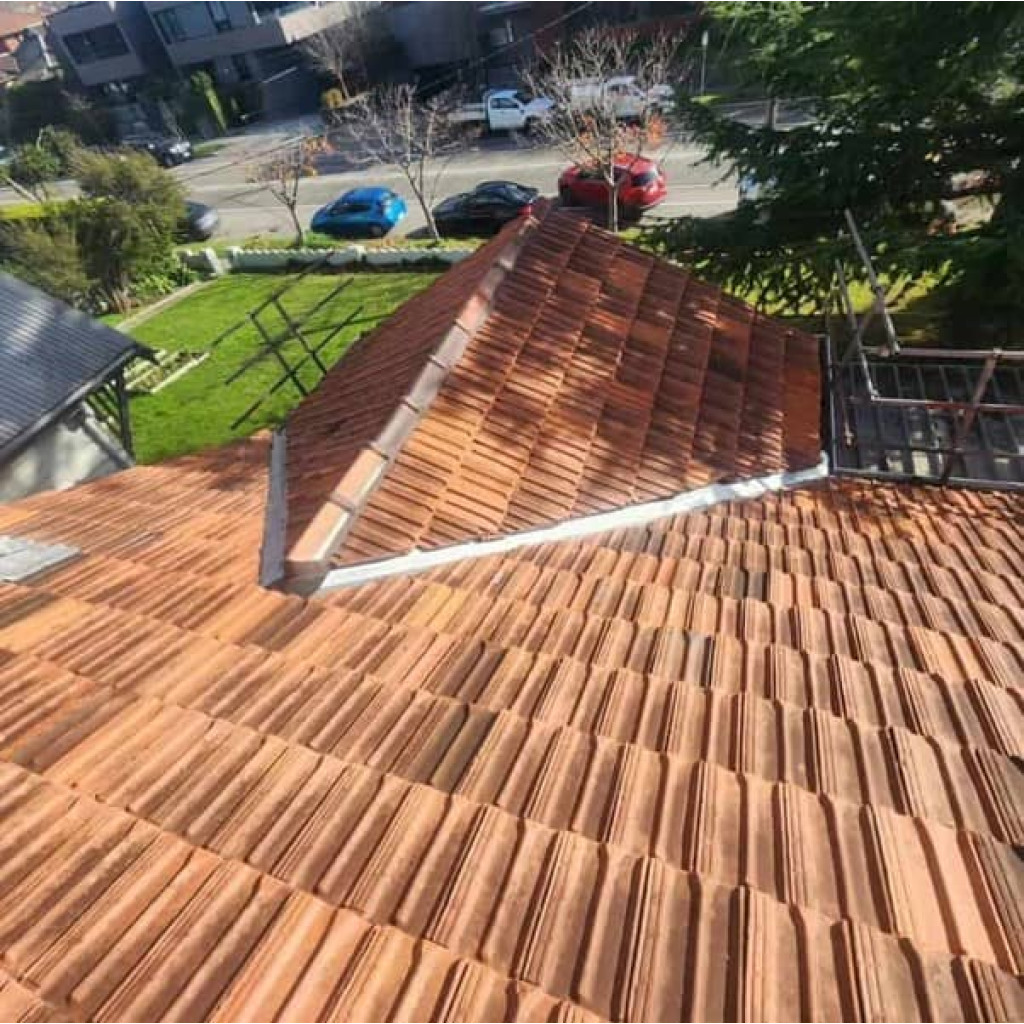
Roof pointing and re-bedding costs directly reflect the ridge length in linear metres rather than the surface area of the roof. A large roof with a complicated ridge layout would cost more than a roof with a simple layout.
Ridge length affects pricing in a few ways:
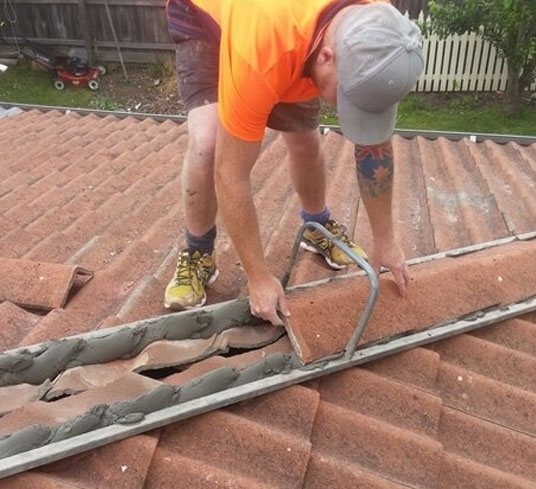
- Labour: Re-bedding means stripping out the old, crumbling mortar, lifting the ridge caps, laying a fresh cement base, and carefully realigning every cap before pointing can even begin. The longer the ridge, the more of this labour-intensive work is involved.
- Materials: Longer ridge lines simply use more bedding mortar and flexible pointing compound.
As a rough guide, average pricing across Melbourne tends to fall into a few tiers:
- Small roofs (15–25 linear metres): generally $1,500 to $2,500 for a full re-bed and repoint
- Standard 3–4 bedroom homes (25–40 linear metres): generally $2,200 to $4,500
- Large or complex, multi-ridged roofs (40+ linear metres): often $5,000 to $6,000 or more
These are general averages though, not a quote. The only way to know what your roof will actually cost is to have it measured and assessed properly. Get in touch with our team for a free, no-obligation quote and a straight answer.
Roof Pitch and Access
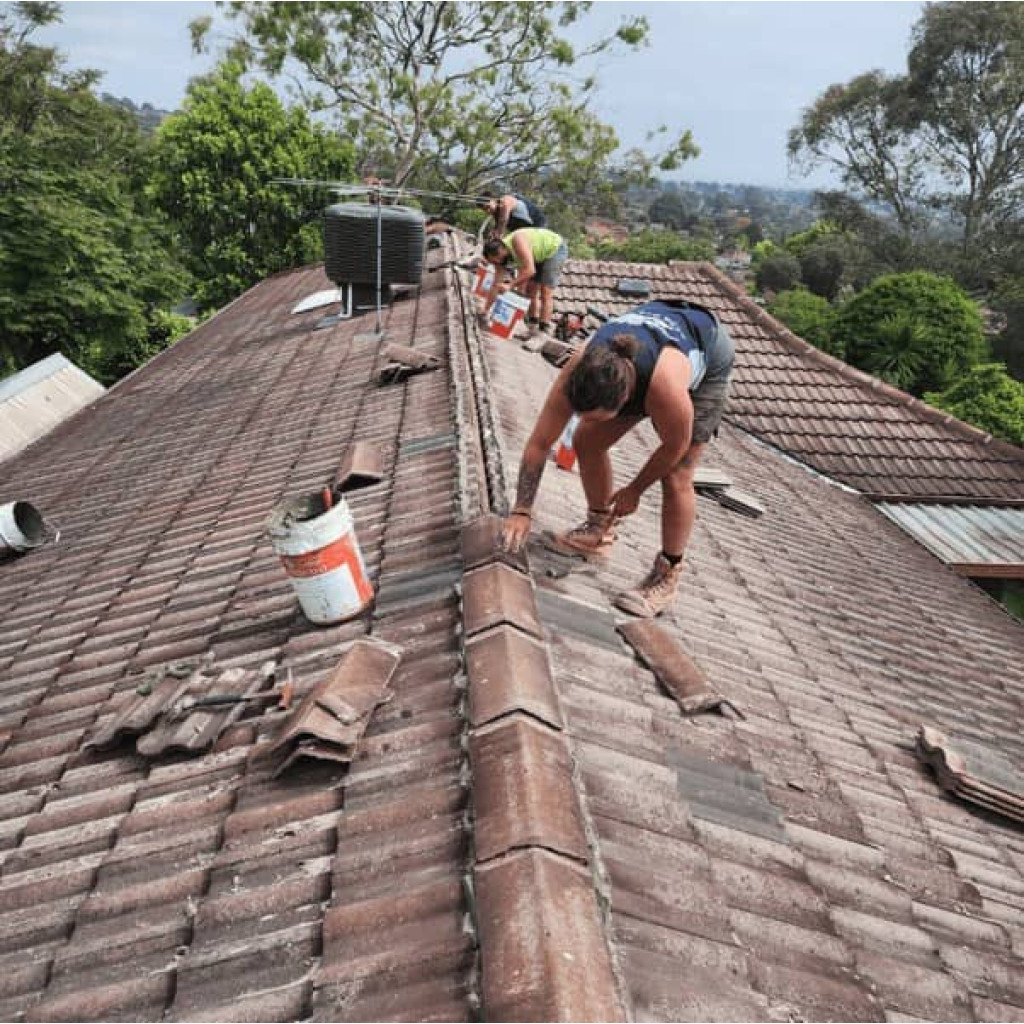
The pitch of your roof, how steep it is, can impact the overall price for a roof repair. Steep pitches require more safety precautions such as scaffolding and harnesses, which increase the overall labour fee.
Access to your roof can also change the pricing. If it is a single-storey home with easy access, the labour and setup costs will be lower than if it’s a two-storey home, or only accessible down a narrow alleyway or side street.
How Roof Pitch Affects Price
- Low Pitch: Easy footing and standard movement mean faster work times and lower labour rates.
- Steep Pitch: High-angle roofs slow down movement, demand specialised harness gear, and can add a 20% to 35% surcharge for safety and difficulty.
- Complex Angles: Multiple valleys and gables increase time spent cutting and bedding ridge caps.
How Roof Access Affects Price
- Easy Access: Ground-level setups with clear truck parking allow direct material loading.
- Restricted Access: Tight side-alleys, multi-story heights, or surrounding trees prevent ladder or crane access.
- Safety Gear: Needing perimeter scaffolding, edge protection, or platform lifts adds direct equipment and setup costs.
Extent of Damage: Repointing vs. Full Re-Bedding
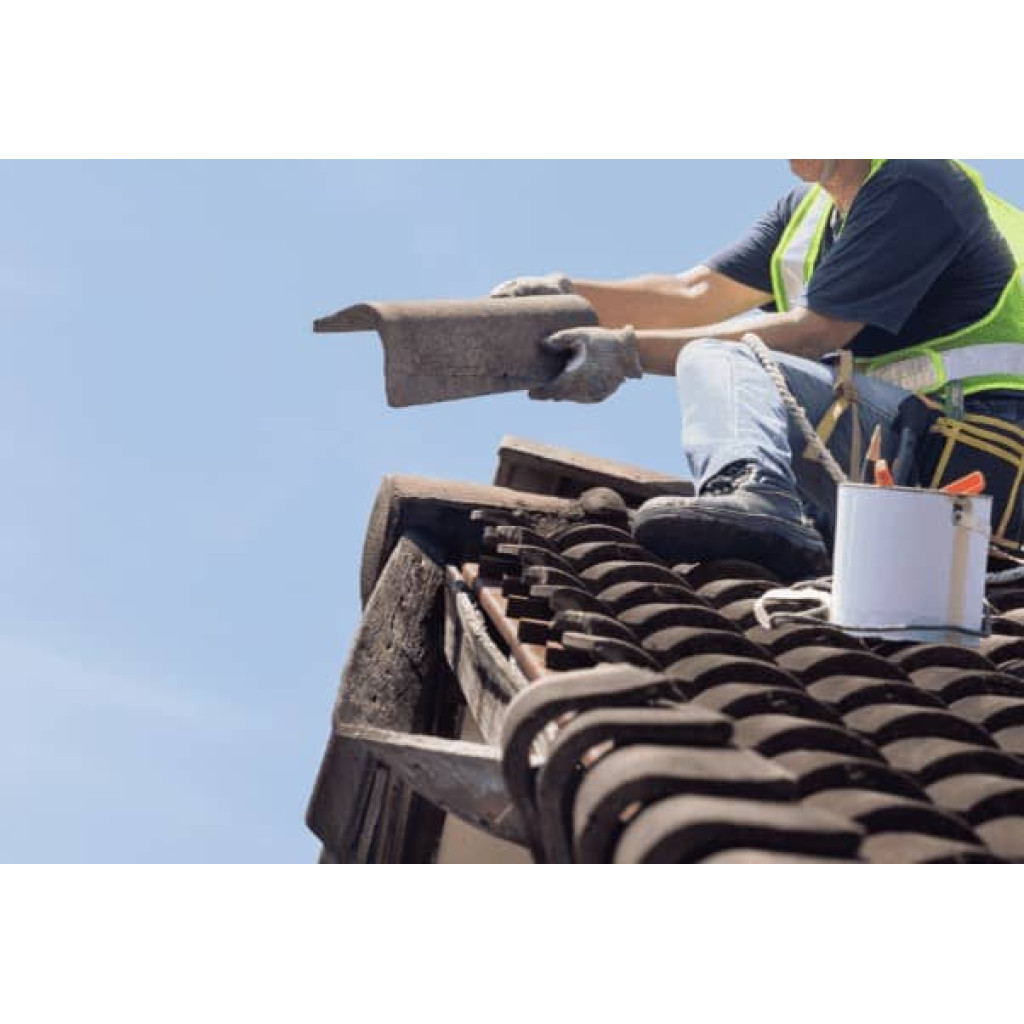
One main aspect of a roof quote is how much damage needs to be repaired. Repointing is a surface-level seal used when the underlying base, or bed, is still solid. Re-bedding is required when ridge caps are coming loose, old cement is chipping and flaking, and water is getting in, meaning the mortar needs to be stripped back and relaid from scratch.
- Minor cracking: If the cement base under your ridge caps is completely firm and stable, only surface work is required.
- Loose or detached ridge caps: If tiles or caps wobble, or chunks of mortar are missing, a solid base no longer exists. This forces a full or partial re-bed before any sealing can happen.
Repointing vs. Full Re-Bedding
- Repointing: Acts as a flexible, weather-resistant outer shield applied over existing sound mortar to stop leaks and accommodate thermal expansion.
- Re-bedding: A heavier, more labour-intensive job requiring complete replacement of the sand-and-cement core under the ridge tiles.
Because re-bedding involves stripping, rebuilding, and realigning the base itself rather than just resealing it, it will always cost more than repointing alone. It’s also why an accurate quote depends on a tradie actually inspecting the bed underneath, not just looking at the surface cracks.
Material Choice: Traditional Mortar vs. Flexible Pointing
Material choice drives roof maintenance costs by dictating longevity and labour. Traditional sand-and-cement mortar is rigid and cheap upfront, but it cracks easily under thermal expansion and house movement. Modern acrylic or polymer-based Flexible Pointing costs more initially, but it stretches with the roof to prevent leaks and lasts years longer without cracking.
Traditional Mortar
- Low upfront cost: Inexpensive raw ingredients (sand and cement).
- Rigid structure: Dries completely hard with zero capacity to expand or contract.
- High maintenance: Prone to cracking, crumbling, and letting water in within a few years.
- Labour-intensive: Takes more time to mix, apply, and repair when it fails.
Flexible Pointing
- Higher material cost: Specialized polymer formulas cost more per tub than basic cement.
- Elastic properties: Bends safely during high winds, temperature shifts, and ground movement.
- Superior waterproofing: Forms a tight, weather-resistant seal over ridge caps.
- Long-term savings: Needs far fewer repairs and prevents expensive structural water damage.
Number of Ridge Caps and Roof Complexity
The primary driver of costs in roof pointing and re-bedding is the total linear length of the ridge and hip lines, and the overall complexity of the roof. More caps means more materials. More complex angles of the roof line means more labour and safety requirements.
How Ridge Caps Drive the Price
- Linear Metres: Work is typically priced per linear metre of ridge capping. Longer ridge lines require more physical removal of old material, fresh cement bedding, and flexible pointing application.
- Material Volume: A higher number of individual ridge caps means a direct increase in the consumption of sand, cement, and acrylic flexible pointing compounds.
How Roof Complexity Drives the Price
- Pitch and Height: Steep roofs or multi-storey homes require extra safety setups like edge protection or scaffolding.
- Layout and Angles: Hips, valleys, and varying roof junctions mean more cuts, specialized handling, and slower progress for tradespeople compared to a simple, single-gable layout.
- Existing Damage: Extent of cracked capping, brittle tiles, or rotted sub-structures multiplies baseline labour before new bedding can even start.
Site Access and Location
Site access and location is another price driver. Easy access to the site on a flat piece of land is best. Sloping land or a lot of trees to navigate means more time and labour expenses.
How Site Access Impacts Price
- Roof Height: Two-storey or three-storey homes add a 20% to 35% labour and equipment premium compared to single-storey homes because workers need extra safety harnesses or scaffolding.
- Slope and Pitch: Steeply pitched roofs make walking and placing tools dangerous and slow, increasing the time needed to re-bed mortar and apply pointing.
- Obstructions: Tight property boundaries, heavy landscaping, or narrow driveways block ladders and material lifting equipment, forcing manual carrying of heavy mortar and tiles.
How Location Impacts Price
- Travel Distance: Jobs located far outside standard metropolitan service zones add travel time and fuel costs for tradespeople.
- Local Regulations: Specific council rules, heritage overlays, or parking permits in inner-city regions can add administrative overhead or restrict working hours.
- Site Logistics: Inner-city or restricted-access urban streets may require traffic management or specialized placement for waste bins and gear.
Get a Straight Answer for Your Roof
As you can see, “how much does roof pointing and re-bedding cost?” doesn’t have a one-size-fits-all answer. Ridge length, roof pitch, access, the extent of damage, material choice, and even where you’re located all play a part in the final number. It’s why two homes on the same street can end up with two very different quotes for what sounds like the same job.
The good news is you don’t have to guess. Our team can assess your roof properly and give you a clear, honest quote based on what your roof actually needs, not a generic estimate pulled out of thin air. We provide roof repairs in Patterson Lakes, and roof restoration in Knoxfield and Pakenham. Get in touch for a free, no-obligation quote and know exactly what you’re paying for.